

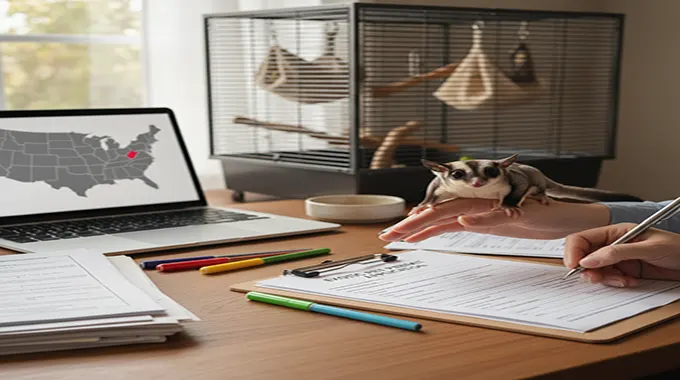
The sugar glider ($Petaurus\ breviceps$) is an undeniably captivating animal. With their large, expressive eyes and endearing ability to “glide” using a membrane called the patagium, these tiny marsupials have become popular exotic pets. This unique appeal, however, is sharply contrasted by complex legal realities across the United States.
These small creatures are non-native, exotic pets, and their classification often subjects them to heavy regulation. This is primarily because state and local governments view them as a potential risk to native wildlife, agriculture, and public health if they were to escape and establish a wild population or transmit zoonotic diseases. This exotic classification is what triggers the permit system. Before you bring home one of these pocket pets, it is mandatory to verify the legal states to own a sugar glider and permit requirements in your specific area.
🚫 States Where Sugar Gliders Are Strictly Illegal
For many prospective owners, the dream of sugar glider ownership ends at the state line. Several states have outright bans, classifying the glider as “unrestricted exotic animals” or “dangerous wildlife.”
The states most commonly cited as having strict prohibitions are:
- Alaska
- California
- Hawaii
- Massachusetts
Hawaii’s warm climate and sensitive ecosystem make its ban particularly strict, as there is a genuine concern that gliders could survive and become an invasive species. While legal in most of the contiguous 48 states, it is crucial to understand that a state’s legality does not override a local ban. Many major cities, such as New York City and St. Paul, Minnesota, prohibit them through local ordinances. You must check laws at the state, county, and city levels. Illegally possessing a sugar glider can result in steep fines, confiscation of the animal, and, in severe cases, the animal’s euthanasia.
✅ Legal States and The Permit Requirement Process
In the majority of the US, sugar gliders are legal but fall under specific exotic pet regulations that require a license or permit. The purpose of the permit is to track the animal, ensure ethical sourcing, and verify the owner’s capability to care for it.
States like Pennsylvania, New Mexico, and Georgia often require owners to obtain a permit or provide documentation proving the glider originated from a source inspected and regulated by the United States Department of Agriculture (USDA), verifying the animal was legally sourced.
A typical permit application process involves three components:
- Formal Application and Fees: Submitting a detailed form and paying an associated fee, which can be low-cost and may be annual (e.g., New Jersey) or valid for several years (e.g., Delaware).
- Verification of Sourcing: The state often mandates that the glider be obtained only from a reputable, USDA-licensed breeder or dealer. This ensures the animal was not illegally imported.
- Home Inspection/Knowledge Assessment: In some jurisdictions, an investigator may conduct a home inspection to verify that the enclosure is appropriate and secure. They may also assess your knowledge of the glider’s specialized dietary and social needs.
Permits are generally issued by the State’s Department of Fish and Wildlife or Department of Agriculture, and the requirements and processing times vary widely.
📝 Key Takeaway and Due Diligence
The responsibility for legal compliance rests entirely on the prospective owner. Given the varying and often complex laws, due diligence is not optional. Never rely solely on a pet store or an online forum for legal advice.
Before committing to a sugar glider, you must take this critical step: Directly contact your specific city and county clerk’s office, as well as the state’s Department of Fish and Wildlife. They will provide the most current and accurate regulations for the exact location where you live.
Ensuring legal compliance is the first step toward responsible and ethical ownership, guaranteeing a secure future for both you and your unique new pet.