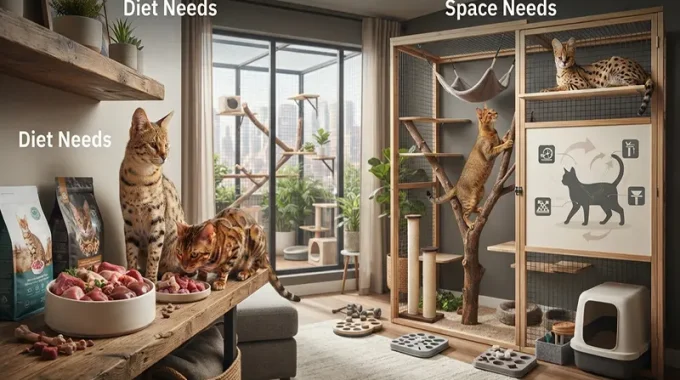
Diet and Space Needs for Hybrid Exotic Pet Cat Breeds

There is an undeniable fascination surrounding hybrid exotic cats. Breeds like the Savannah (a cross between a domestic cat and an African serval), the Bengal (descended from the Asian leopard cat), and the Chausie (derived from the wild jungle cat) bring a breathtaking touch of the wilderness directly into the domestic sphere. With their striking spots, powerful musculature, and intense intelligence, they capture the imagination of cat lovers worldwide.

However, bringing a hybrid cat into your home is radically different from adopting a standard domestic tabby. Beneath their exotic coats lies a wild genetic blueprint. To keep these magnificent animals healthy, balanced, and safe, owners must meet uncompromising, highly specialized requirements when it comes to their diet and living space.

The High-Performance Fuel: Specialized Nutritional Requirements

Standard commercial cat kibble from the grocery store aisle simply will not cut it for a hybrid feline. Their metabolisms, digestive tracts, and nutritional …
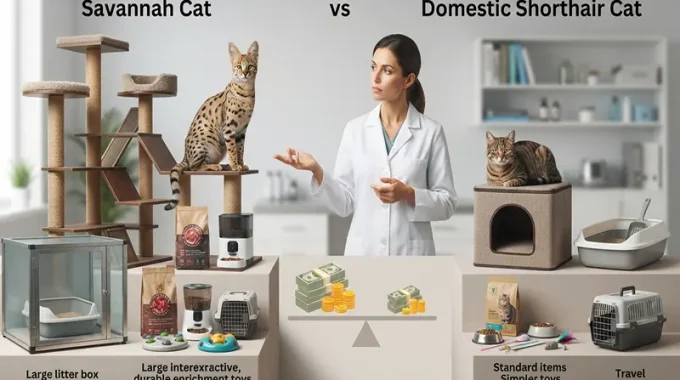
Cost of Caring for a Savannah Cat Versus a Domestic Cat

There is an undeniable allure to the wild aesthetic of a Savannah cat. Standing tall with long legs, large cupped ears, and striking spotted coats that mirror their African serval ancestry, these hybrid felines look like miniature leopards walking through your living room.

However, inviting a hybrid animal into your home is an entirely different financial and lifestyle commitment than adopting a traditional domestic cat. While a standard domestic cat is a straightforward, budget-friendly companion, a Savannah cat—particularly early filial generations like F1 to F4—represents a massive, multi-faceted investment. Understanding the true cost breakdown is essential before taking the leap.

Upfront Acquisition and Legal Investment

The financial divergence between a domestic cat and a Savannah cat begins the very second you look to bring one home.

1. Purchase and Adoption Fees

  • Traditional Domestic Cat: Typically costs anywhere from $50 to $200 as an adoption fee from a shelter or rescue
…

Best Low Maintenance Exotic Cat Breeds for Apartment Living

There is an undeniable magic in watching a miniature leopard pad across your living room rug or catching the striking, high-contrast rosette patterns of an exotic feline as it lounges in a sunbeam. For urban pet lovers, the appeal of wild aesthetics combined with domestic companionship has sparked a massive surge in popularity for exotic-looking cat breeds.

However, bringing a cat with a wild pedigree into an apartment requires careful planning. True wild cats or early-generation hybrids (such as F1–F3 Savannahs) demand specialized enclosures, massive amounts of space, and expert handling. Fortunately, you don’t need a sprawling country estate to enjoy a wild look. Several established domestic breeds deliver stunning, exotic appearances while boasting the adaptable, easygoing temperaments required for comfortable apartment living.

What Makes an Exotic Breed “Apartment-Friendly”?

Before exploring specific breeds, it helps to understand what separates a manageable urban companion from a high-maintenance handful. An apartment-friendly exotic …

Legal Requirements for Owning Exotic Pet Cats by State

The allure of owning an exotic cat—whether it is a spotted Bengal, a towering Savannah, or a wild African serval—has skyrocketed over the last decade. However, unlike traditional domestic cats, bringing an exotic or hybrid feline into your home involves navigating a labyrinth of federal, state, and municipal legislation.

Because laws governing wild and hybrid animals vary wildly, understanding the legal landscape is an absolute necessity before committing to ownership.

The Spectrum of Ownership: Hybrids vs. Pure Wild Felines

Legally speaking, not all exotic cats are categorized the same way. States generally draw a sharp line between domestic hybrid crosses and pure wild species.

  • Domestic Hybrids (e.g., Savannah and Bengal Cats): These are crosses between a domestic cat and a wild species (such as an Asian Leopard Cat or an African Serval). Laws usually categorize them by “filial generation” (F1, F2, F3, F4, etc.).
  • Early Generations (F1–F3): These cats possess
…

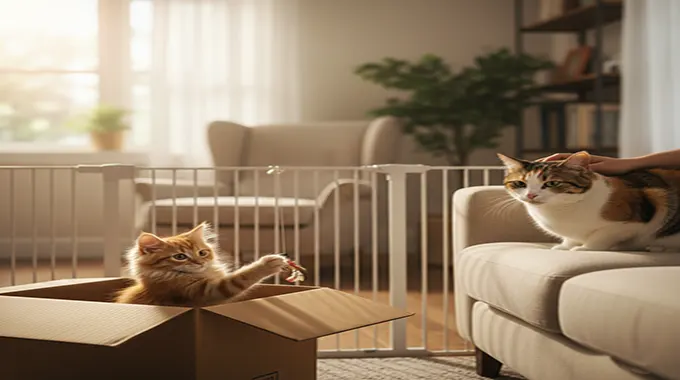
The Ultimate Guide: How to Introduce a Hyperactive Kitten to an Older Resident Cat

Bringing a whirlwind of fluff and non-stop energy—a hyperactive kitten—into a home ruled by a placid, older resident cat can feel like setting the stage for a feline feud. The conflict is clear: The kitten needs constant play, exploration, and hunting practice (often directed at the older cat), while the older cat desires only its established routine, comfort, and peace.

The good news is that successful integration is absolutely possible. The key is recognizing the mismatch and relying on controlled exposure and managing the kitten’s energy before physical interactions. You cannot force them to be friends, but you can create an environment where a peaceful truce—and eventually friendship—can flourish.

🏠 The Essential Pre-Introduction Phase

Do not let the kitten and the older cat meet face-to-face immediately. A stressful first encounter can permanently damage their relationship.

1. Establish the Sanctuary Room:

The kitten’s arrival day starts in a secure, separate “safe …