High Protein Affordable Puppy Food Brands for Fast Growing Breeds

Raising a fast-growing large or giant breed puppy—such as a German Shepherd, Labrador Retriever, Golden Retriever, or Mastiff—is an incredible adventure. It is also an expensive one. During their first year of rapid development, these dogs seemingly possess bottomless stomachs, turning every trip to the pet supply store into a major investment.

While high protein is non-negotiable for building strong muscles and supporting an energetic puppy framework, large-breed nutrition requires a delicate balancing act. High protein must be carefully calibrated with controlled calories and precise calcium-to-phosphorus ratios to prevent rapid, uneven bone growth. Fortunately, you do not need to empty your bank account on boutique marketing labels to give your giant pup a safe, high-quality start.

The Golden Rules of Large-Breed Puppy Nutrition on a Budget

When hunting for an affordable, high-protein food for a fast-growing dog, savvy owners should look past flashy packaging and evaluate the metrics that actually …
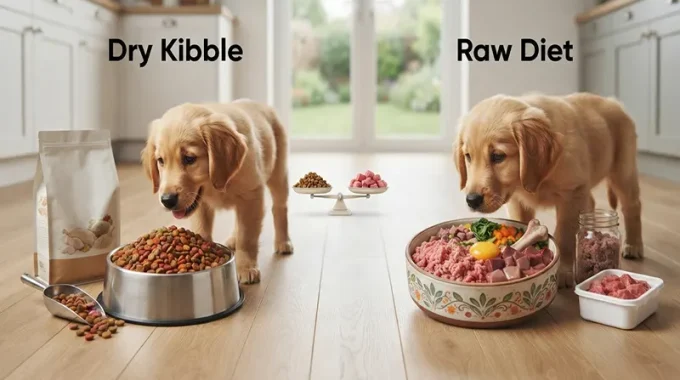
Dry Kibble vs Raw Diet Puppy Food for Golden Retrievers

Welcoming a Golden Retriever puppy into your home brings an immediate wave of joy—followed quickly by an overwhelming amount of advice on how to raise them. Among all the decisions you will make, few spark as much intense debate as nutrition. Golden Retriever puppies have unique developmental vulnerabilities, making their early diet choices critical to their long-term health.

As you navigate the pet food aisles or online forums, you will inevitably find yourself caught in the crossfire of the great modern nutrition debate: the safety and scientific consistency of premium dry kibble versus the ancestral, highly palatable appeal of a raw food diet.

The Golden Retriever Growth Equation: Why Puppy Nutrition Matters

Golden Retrievers are classified as large-breed dogs, meaning they experience a rapid, dramatic skeletal expansion during their first 12 to 18 months of life. This unique growth trajectory introduces strict physiological requirements that smaller breeds simply do not …

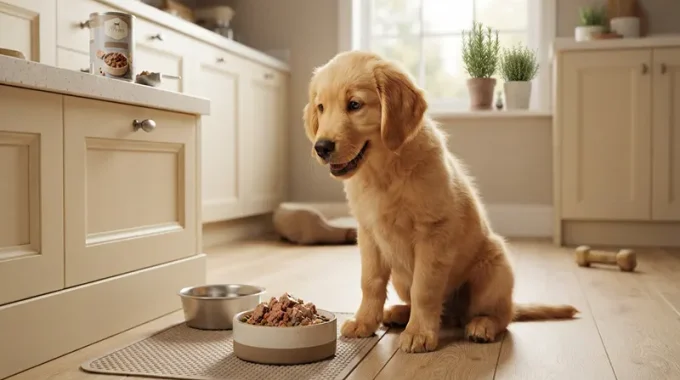
How Much Wet Food to Feed a 3 Month Old Puppy Per Day

Watching a puppy grow from a clumsy roly-poly ball of fur into an active adolescent is one of the most exciting parts of pet ownership. At 3 months (or 12 weeks) old, your puppy is in the absolute peak of their developmental phase. Their brains are wiring rapidly, their muscles and bones are expanding at an astonishing rate, and their energy levels are seemingly infinite.

To fuel this whirlwind of growth, proper nutrition is critical. However, figuring out how much wet food to feed a 12-week-old puppy can feel like solving a complex math puzzle. Unlike dry kibble, which can sometimes be left out or easily measured in standard cups, wet food is dense, highly palatable, and varies drastically in caloric content from one brand to another.

The 3-Month Growth Window: Why Caloric Needs Are Sky-High

If you feel like your 3-month-old puppy is perpetually hungry, you aren’t imagining things. …

Best Grain-Free Puppy Food for Sensitive Stomach Large Breeds

Raising a large or giant-breed puppy is an incredible journey. Watching a tiny Lab, German Shepherd, or Great Dane puppy transform into a majestic adult is rewarding, but it comes with a unique set of nutritional tightropes. Large-breed puppies have notoriously delicate gastrointestinal systems, often prone to soft stools, gas, and food sensitivities.

When standard puppy foods cause digestive upset, many owners turn to grain-free formulas. However, feeding a fast-growing giant breed requires balancing gut relief with strict skeletal safety.

The Unique Nutritional Equation for Large-Breed Puppies

Unlike small-breed puppies who reach maturity within a year, large and giant breeds grow rapidly for 18 to 24 months. Their nutritional requirements are intensely specialized:

  • Controlled Caloric Density: Overfeeding a large-breed puppy or giving them a food that is too calorie-dense causes them to grow too fast. Their bones cannot keep pace with their weight gain, triggering severe developmental orthopedic diseases like
…

The Best Way to Carry Your Small Dog on a Plane

If you are going across the country if even abroad and you want to bring your little dog with you then you will want to have it with you in the aircraft cabin. This will allow you to ensure that it remains comfortable and comfortable and that you can keep an eye on it. Even though you can’t get a dog out of the carrier you will use it to carry it on the plane. You can check periodically and if you make sure you have a good operator, you can make sure you keep your pet as comfortable as possible. There are a number of things that you want to look for to ensure that your pet is as comfortable as possible on the plane.

Portability

Make sure that you get a carrier that has a good grip so you can easily maneuver about the airport with your other …