
Bringing a whirlwind of fluff and non-stop energy—a hyperactive kitten—into a home ruled by a placid, older resident cat can feel like setting the stage for a feline feud. The conflict is clear: The kitten needs constant play, exploration, and hunting practice (often directed at the older cat), while the older cat desires only its established routine, comfort, and peace.
The good news is that successful integration is absolutely possible. The key is recognizing the mismatch and relying on controlled exposure and managing the kitten’s energy before physical interactions. You cannot force them to be friends, but you can create an environment where a peaceful truce—and eventually friendship—can flourish.
🏠 The Essential Pre-Introduction Phase
Do not let the kitten and the older cat meet face-to-face immediately. A stressful first encounter can permanently damage their relationship.
1. Establish the Sanctuary Room:
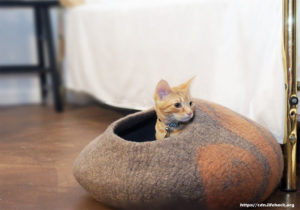
The kitten’s arrival day starts in a secure, separate “safe room” (a bathroom or spare bedroom). This space should contain all of the kitten’s resources (food, water, litter box, toys). Crucially, the older cat should maintain full, uninterrupted access to all familiar spaces, ensuring they don’t feel territorial displacement.
2. Scent Swapping (The Invisible Hello):
Before any physical sighting, use towels or blankets to swap scents. Gently rub a towel on the kitten, then place it near the older cat’s favorite resting spot, and vice versa. This acclimates both cats to the “smell” of the other without the stress of confrontation.
3. Managing Kitten Energy (The Crucial Step):
When learning how to introduce a hyperactive kitten to an older resident cat, managing the kitten’s energy is paramount. A tired kitten is a polite kitten. The kitten must be “drained” daily with structured play (using wand toys that mimic hunting) for at least 15-20 minutes, two or three times a day. This eliminates the predatory drive they might otherwise direct at the older cat.
4. Positive Association with Feeding:
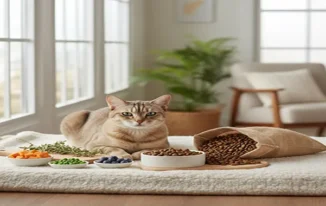
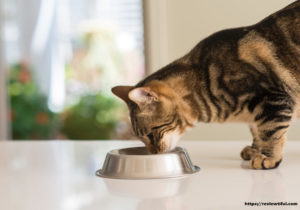
Feed both cats on opposite sides of the closed sanctuary door. This builds a powerful positive association: “Good food happens when the other cat is near.”
🚪 Controlled and Positive Introductions
5. Visual Exposure (The Baby Gate Method):
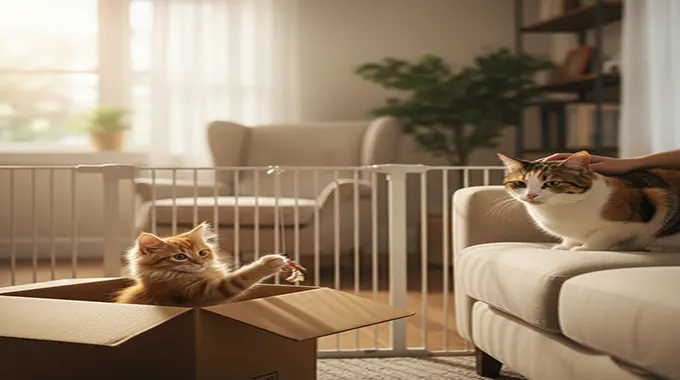
Once both cats are calm during the scent swapping and door feeding, introduce brief, controlled visual sessions using a secure baby gate.
- The Rule: Keep sessions short (5-10 minutes). Distract both cats with high-value treats or a quiet activity during the viewing. Never let the kitten lunge, stare, or harass the older cat.
6. Supervised Physical Time:
When the cats are relaxed by the gate, you can transition to brief, supervised physical introductions in a neutral area.
- Follow the “Tired Kitten” Rule: Only attempt this after the kitten has had a vigorous play session and a quick meal. A sleepy, full kitten is less likely to harass or annoy the older cat.
🗣️ Recognizing Signals and Ensuring Success
Watch the cats’ body language closely:
- Acceptable Behavior: Hissing (a warning, a way of saying “too close”), swatting without claws, or avoidance.
- Unacceptable Behavior: Pinned ears, deep growling, lunging, chasing, or continuous, focused harassment by the kitten. End the session immediately if unacceptable behavior occurs, and revert to the gate stage.
Patience is non-negotiable. Integration can take weeks or even months, especially given the natural mismatch in age and temperament. Always ensure the older cat has vertical escape routes (cat trees, shelves) and private resources (an extra litter box, a feeding station) that the kitten cannot easily access. By managing the kitten’s energy, controlling the environment, and letting them set the pace, you pave the way for a peaceful, multi-cat household.