Developmental Benefits of Pet Ownership for Young Children

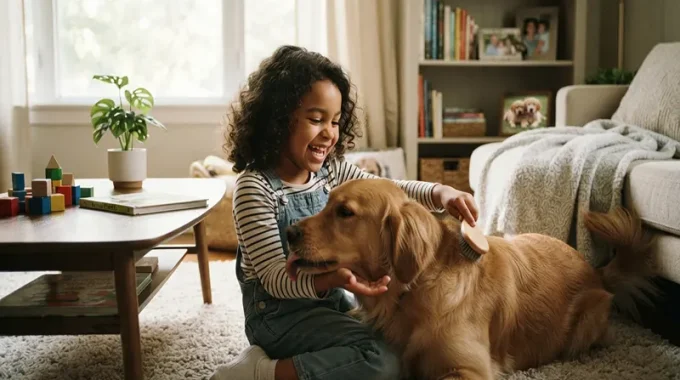
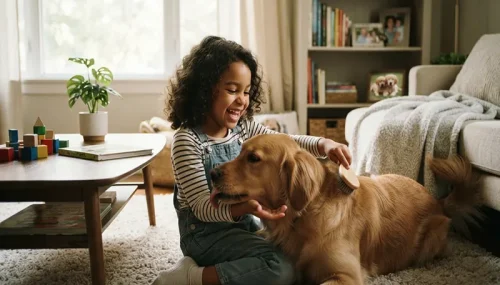
Picture a quiet afternoon: a toddler sitting cross-legged on the living room rug, carefully “reading” a picture book out loud to an immensely patient golden retriever resting its heavy chin on the child’s knee. Scenes like this are heartwarming, but they represent far more than just a sweet family moment.
For young children, growing up alongside a pet offers a rich, immersive developmental laboratory. Beyond providing endless entertainment, pet ownership plays a profound, scientifically supported role in shaping a child’s emotional intelligence, social skills, physical health, and cognitive growth.
Emotional Intelligence and Empathy Building
Long before children fully grasp complex human emotions, they learn to read the world through their interactions with animals. Pets become a child’s first bridge to genuine empathy.
- Decoding Non-Verbal Cues: Animals don’t speak human languages, forcing young children to pay close attention to body posture, ear positions, tail wags, and whimpers. This sharpens a child’s