
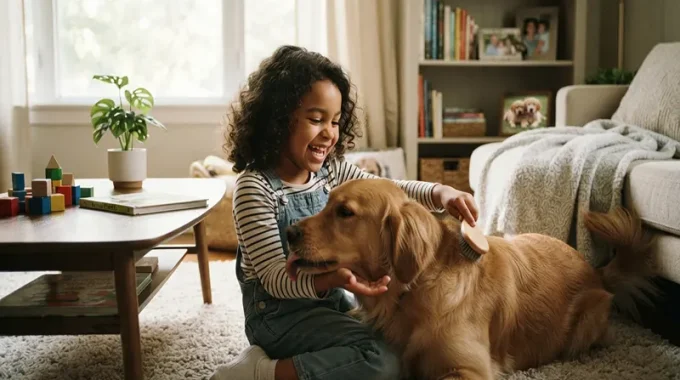
Picture a quiet afternoon: a toddler sitting cross-legged on the living room rug, carefully “reading” a picture book out loud to an immensely patient golden retriever resting its heavy chin on the child’s knee. Scenes like this are heartwarming, but they represent far more than just a sweet family moment.
For young children, growing up alongside a pet offers a rich, immersive developmental laboratory. Beyond providing endless entertainment, pet ownership plays a profound, scientifically supported role in shaping a child’s emotional intelligence, social skills, physical health, and cognitive growth.
Emotional Intelligence and Empathy Building
Long before children fully grasp complex human emotions, they learn to read the world through their interactions with animals. Pets become a child’s first bridge to genuine empathy.
- Decoding Non-Verbal Cues: Animals don’t speak human languages, forcing young children to pay close attention to body posture, ear positions, tail wags, and whimpers. This sharpens a child’s observational skills and ability to interpret emotional states in others.
- Cultivating Compassion: When a child learns that a cat needs gentle petting or that a dog requires quiet time when resting, they internalize the concept of respecting another living being’s boundaries and feelings.
- A Non-Judgmental Emotional Anchor: Children frequently experience big, overwhelming feelings that they struggle to articulate. Pets offer unconditional, non-judgmental acceptance. Hugging a family dog or whispering a secret to a pet provides a powerful psychological buffer against stress, anxiety, and sadness.
Social Skills and Responsibility
Introducing small, age-appropriate pet-care tasks into a young child’s daily routine builds foundational life skills that translate directly into human relationships.
- Fostering Accountability: Even a toddler or preschooler can participate in daily care—such as dropping a scoop of kibble into a bowl under supervision or helping brush a rabbit’s fur. These tiny responsibilities teach kids that living creatures rely on consistent actions.
- The Social Catalyst Effect: Pets naturally boost social confidence. Children who grow up with pets often find it easier to initiate conversations, share experiences, and develop strong peer relationships, as pets provide an effortless, universal topic of connection and joy.
Physical Health and Immune System Development
While emotional growth is vital, the physical perks of early pet exposure are equally staggering, supported by decades of pediatric and immunological research.
- The Hygiene Hypothesis in Action: Numerous studies show that infants and toddlers raised in households with dogs or cats have a significantly lower risk of developing allergies, eczema, and asthma later in childhood. Early exposure to pet dander and microbes effectively trains the developing immune system to respond properly rather than overreacting to harmless allergens.
- Encouraging Active Play: Pets are natural motivators for movement. Whether chasing a puppy around the backyard or throwing a ball, animals encourage gross motor skill development, cardiovascular activity, and a healthy, outdoor-oriented lifestyle.
Practical Guidelines for Safe Child-Pet Integration
While the benefits are immense, successful pet ownership with young children requires clear boundaries and active adult supervision:
- Supervise All Interactions: Never leave a young child and a pet completely unsupervised. Adults must act as mediators to ensure safety for both parties.
- Teach Animal Boundaries: Children must be taught early on that pets are living beings, not stuffed toys. Establish strict rules: never disturb a sleeping or eating animal, never pull tails or ears, and always respect a pet walking away to find quiet space.
- Choose the Right Temperament: When bringing a pet into a home with young children, prioritize calm, resilient, and patient temperaments over high-energy or easily startled breeds.
The lessons learned from a childhood pet extend far beyond the fleeting years of youth. By building emotional intelligence, boosting immune health, teaching accountability, and offering unconditional love, pets help lay the groundwork for resilient, compassionate, and healthy adults. Sharing your home with a furry friend is one of the greatest gifts a parent can give a growing child.