Best Grain-Free Puppy Food for Sensitive Stomach Large Breeds

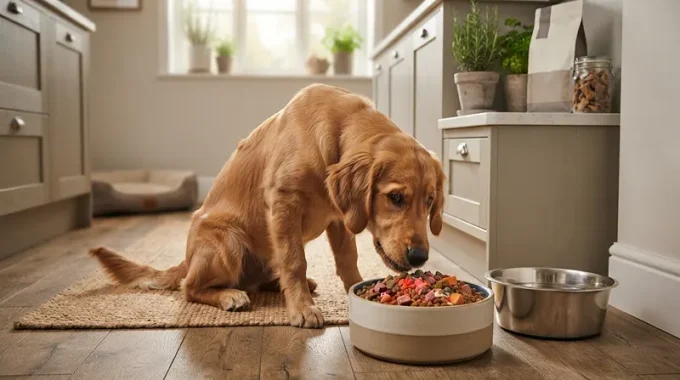
Raising a large or giant-breed puppy is an incredible journey. Watching a tiny Lab, German Shepherd, or Great Dane puppy transform into a majestic adult is rewarding, but it comes with a unique set of nutritional tightropes. Large-breed puppies have notoriously delicate gastrointestinal systems, often prone to soft stools, gas, and food sensitivities.
When standard puppy foods cause digestive upset, many owners turn to grain-free formulas. However, feeding a fast-growing giant breed requires balancing gut relief with strict skeletal safety.
The Unique Nutritional Equation for Large-Breed Puppies
Unlike small-breed puppies who reach maturity within a year, large and giant breeds grow rapidly for 18 to 24 months. Their nutritional requirements are intensely specialized:
- Controlled Caloric Density: Overfeeding a large-breed puppy or giving them a food that is too calorie-dense causes them to grow too fast. Their bones cannot keep pace with their weight gain, triggering severe developmental orthopedic diseases like