

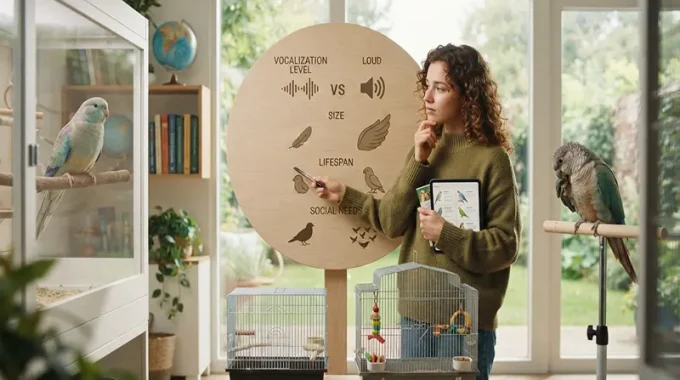
There is a widespread misconception that sharing your home with a pet bird means resigning yourself to a daily soundtrack of ear-piercing shrieks and non-stop squawking. For apartment dwellers, remote workers, and families living in close quarters, the thought of a loud pet is often enough to deter them from experiencing the joy of avian companionship.
However, the bird world is wonderfully diverse. While some species—like large macaws or conures—possess flock-calling mechanisms that can rattle drywall, many other species communicate in soft murmurs, melodic songs, or gentle chirps. Finding a “quiet” bird, however, requires looking past simple breed labels to evaluate vocalization types, environmental triggers, and daily routines.
Factor 1: Vocalization Type—Chirps vs. Screams
Before bringing any bird home, it is vital to understand that no bird is 100% silent. All healthy birds make vocalizations as part of their natural biology. The key differentiator is how they express themselves.
- Melodic Song and Soft Murmurs: Species like canaries or specific small finches communicate through musical trills or quiet, unobtrusive chattering that blends seamlessly into background ambient room noise.
- High-Decibel Alarm Calls: Many parrots are biologically hardwired to produce sharp, piercing contact calls at dawn and dusk. These sounds are designed to carry for miles across a jungle canopy—or straight through apartment walls.
- The Takeaway: True “quiet” species feature low-decibel vocal ranges that remain pleasant even in small, confined living spaces.
Factor 2: Time of Day and Behavioral Triggers
Understanding when and why birds vocalize is just as important as knowing how loud they are. Even quiet birds have predictable daily cycles.
- Dawn and Dusk Choruses: In the wild, birds greet the sunrise and sunset with vocal activity. Even apartment-friendly birds will naturally experience brief windows of active chirping during these times.
- Triggers for Noise: Boredom, hunger, sudden shadows, or feeling startled can turn even a quiet bird into a persistent caller. Establishing a predictable daily routine—including a consistent lights-out schedule for sleep—helps keep vocalizations calm and balanced throughout the day.
Factor 3: Top Quiet Bird Species for Small Spaces
If you are looking for a feathered companion that won’t trigger noise complaints from neighbors, certain species stand out for their naturally subdued volume.
1. Canaries
Renowned for their stunning, operatic singing voices, canaries are surprisingly apartment-friendly.
- Noise Level: Low to Moderate (Melodic). Male canaries sing beautiful, complex songs, but the volume is soft, musical, and rarely disruptive.
- Social Style: Typically kept as solitary birds who prefer human observation over physical handling, making them exceptionally low-maintenance.
2. Zebra Finches and Society Finches
These tiny, active social birds are a delight to watch and listen to.
- Noise Level: Very Low. Their communication consists entirely of gentle, high-pitched “peeps” and soft beeps that blend into background white noise.
- Social Style: Highly gregarious; they thrive best when kept in pairs or small same-species groups, entertaining each other quietly all day long.
3. Bourke’s Parakeets
Unlike their louder conure or lovebird relatives, Bourke’s Parakeets are known as the introverts of the parrot world.
- Noise Level: Very Low. They rarely scream and instead communicate with soft, melodic whistles.
- Social Style: Gentle, docile, and naturally crepuscular (most active at dawn and dusk), meaning they spend the middle of the day resting quietly.
4. Pacific Parrotlets
The smallest true parrot species, parrotlets pack big personality into a tiny, pocket-sized frame.
- Noise Level: Low. While they can chirp enthusiastically, their voice lacks the piercing, window-shattering volume of larger hookbills.
- Social Style: Bold, intelligent, and fiercely loyal to their human owners.
Factor 4: Housing, Social Needs, and Enrichment
Even the quietest bird species can develop noisy behavioral issues—such as chronic screaming or feather-plucking—if their environmental needs are neglected.
- Combatting Loneliness: Birds are flock animals. If left isolated in a dark corner with nothing to do, boredom sets in rapidly.
- Foraging and Mental Stimulation: Provide a rotating selection of shreddable toys, puzzle feeders, and natural wood perches. A mentally engaged bird is a quiet, content bird.
- Cage Placement: Placing the cage in a high-traffic family room where the bird feels included in the household reduces anxiety-driven stress calls.
Choosing a quiet pet bird species is entirely achievable if you look beyond the stereotypes of the pet trade. By understanding the difference between melodic chattering and piercing alarm calls, respecting natural daily rhythms, and opting for low-decibel species like canaries, finches, or Bourke’s parakeets, you can easily enjoy the beauty of avian companionship in a peaceful, noise-sensitive home.